Crochet hook size chart: US and metric sizes with yarn weights
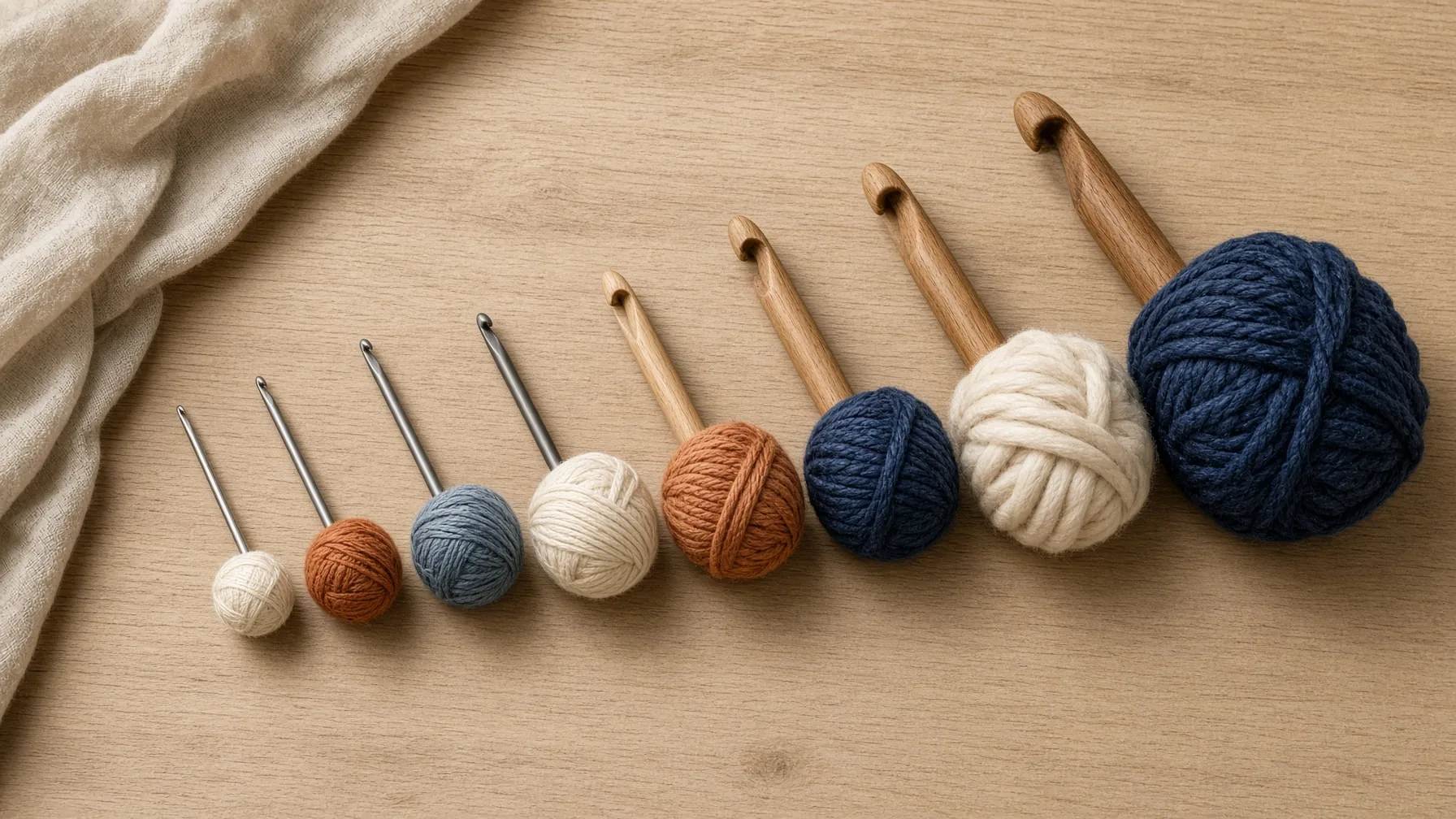
A crochet hook’s real size is the width of its shaft in millimeters, and the US letter or number printed next to it is a label that can change from one brand to the next. The chart below gives every standard size from 2.25 mm (B-1) to 30 mm (T/X), then the hook range the Craft Yarn Council suggests for each yarn weight.
Crochet hook sizes in millimeters and US letters
These are the sizes in the Craft Yarn Council’s hook standard. Three of them have no US label at all, which is a hint about how the letters work.
| Millimeters | US size |
|---|---|
| 2.25 mm | B-1 |
| 2.5 mm | no letter |
| 2.75 mm | C-2 |
| 3.125 mm | D |
| 3.25 mm | D-3 |
| 3.5 mm | E-4 |
| 3.75 mm | F-5 |
| 4 mm | G-6 |
| 4.25 mm | G |
| 4.5 mm | 7 |
| 5 mm | H-8 |
| 5.25 mm | I |
| 5.5 mm | I-9 |
| 5.75 mm | J |
| 6 mm | J-10 |
| 6.5 mm | K-10½ |
| 7 mm | no letter |
| 8 mm | L-11 |
| 9 mm | M/N-13 |
| 10 mm | N/P-15 |
| 11.5 mm | P-16 |
| 12 mm | no letter |
| 15 mm | P/Q |
| 15.75 mm | Q |
| 16 mm | Q |
| 19 mm | S |
| 25 mm | T/U/X |
| 30 mm | T/X |
Look at G for a second. It sits on 4 mm as G-6 and again on 4.25 mm as plain G. I, J and D do the same thing, and Q covers two sizes outright. So if a pattern only says “size G hook”, you still don’t know which of two hooks the designer held.
The letter can vary, the millimeter does not
The Craft Yarn Council says it plainly in its hook standard: letter and number sizing varies from company to company, so rely on the millimeter size on the package. A 5 mm hook is 5 mm across whoever made it. An H from one maker and an H from another are not always the same tool.
Honestly, this is the single most useful habit on this page. When you buy a hook, read the millimeters. When a pattern lists both, follow the millimeters. When a pattern lists only a letter, check the chart above and pick the size it most likely means.
Hooks of the same size can still feel different in your hand. An inline hook has its head in line with the shaft, while a tapered hook narrows at the throat before the head, and the two grab yarn differently. That’s one more reason to make a small swatch with the exact hook you plan to use.
Steel hooks run backwards
Steel hooks are a separate family, made for crochet thread and lace weight yarn, and their numbers count the other way: the higher the number, the smaller the hook. The Craft Yarn Council lists them from #14 at 0.9 mm, the smallest, up to 00 at 2.7 mm. If a doily pattern asks for a size 10 steel hook, it means a tiny one, nowhere near a 10 mm.
Which hook goes with which yarn weight
Every yarn label carries a weight number from 0 to 7. These are the Craft Yarn Council’s suggested crochet hook ranges for each one.
| Yarn weight | Typical yarns | Suggested hook |
|---|---|---|
| 0 Lace | fingering, 10-count crochet thread | steel 1.6 to 1.4 mm, or 2.25 mm (B-1) |
| 1 Super fine | sock, fingering, baby | 2.25 to 3.5 mm (B-1 to E-4) |
| 2 Fine | sport, baby | 3.5 to 4.5 mm (E-4 to 7) |
| 3 Light | DK, light worsted | 4.5 to 5.5 mm (7 to I-9) |
| 4 Medium | worsted, afghan, aran | 5.5 to 6.5 mm (I-9 to K-10½) |
| 5 Bulky | chunky, craft, rug | 6.5 to 9 mm (K-10½ to M-13) |
| 6 Super bulky | super bulky, roving | 9 to 15 mm (M-13 to Q) |
| 7 Jumbo | jumbo, roving | 15 mm and larger (Q and larger) |
Treat these as starting points. The hook in your pattern comes first, because the designer picked it for the fabric they wanted, and that might be firmer or looser than the label suggests.
When to change hook size
Your hands set your tension, and tension changes the size of everything you make. A gauge swatch tells you where you stand: crochet a square at least 10 cm (4 in) across in the pattern’s stitch, then count the stitches and rows across 10 cm. More stitches than the pattern means your work is tight, so go up a hook size. Fewer stitches means it’s loose, so go down one. Patterns give gauge in their own shorthand, and our guide to reading crochet patterns explains it.
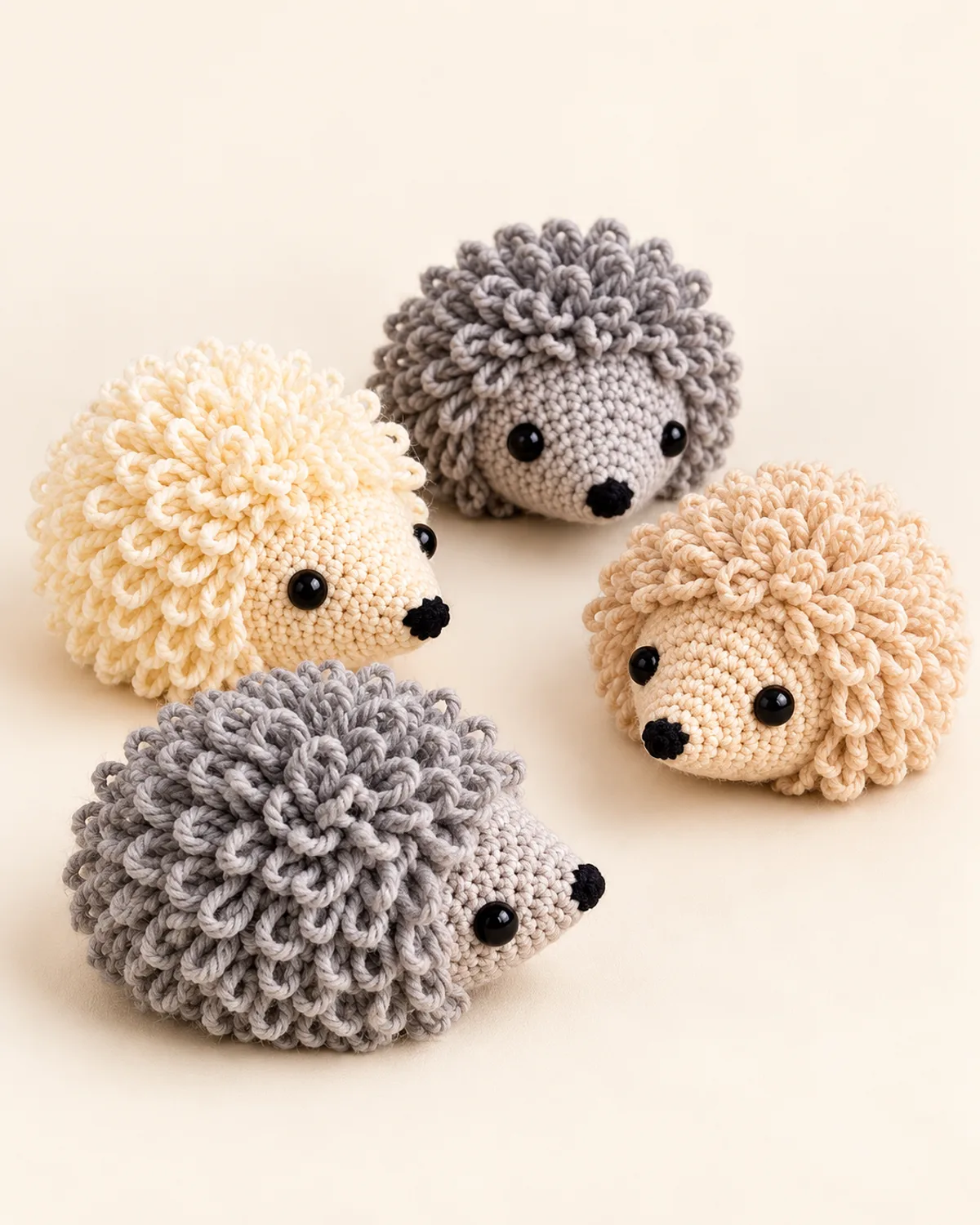
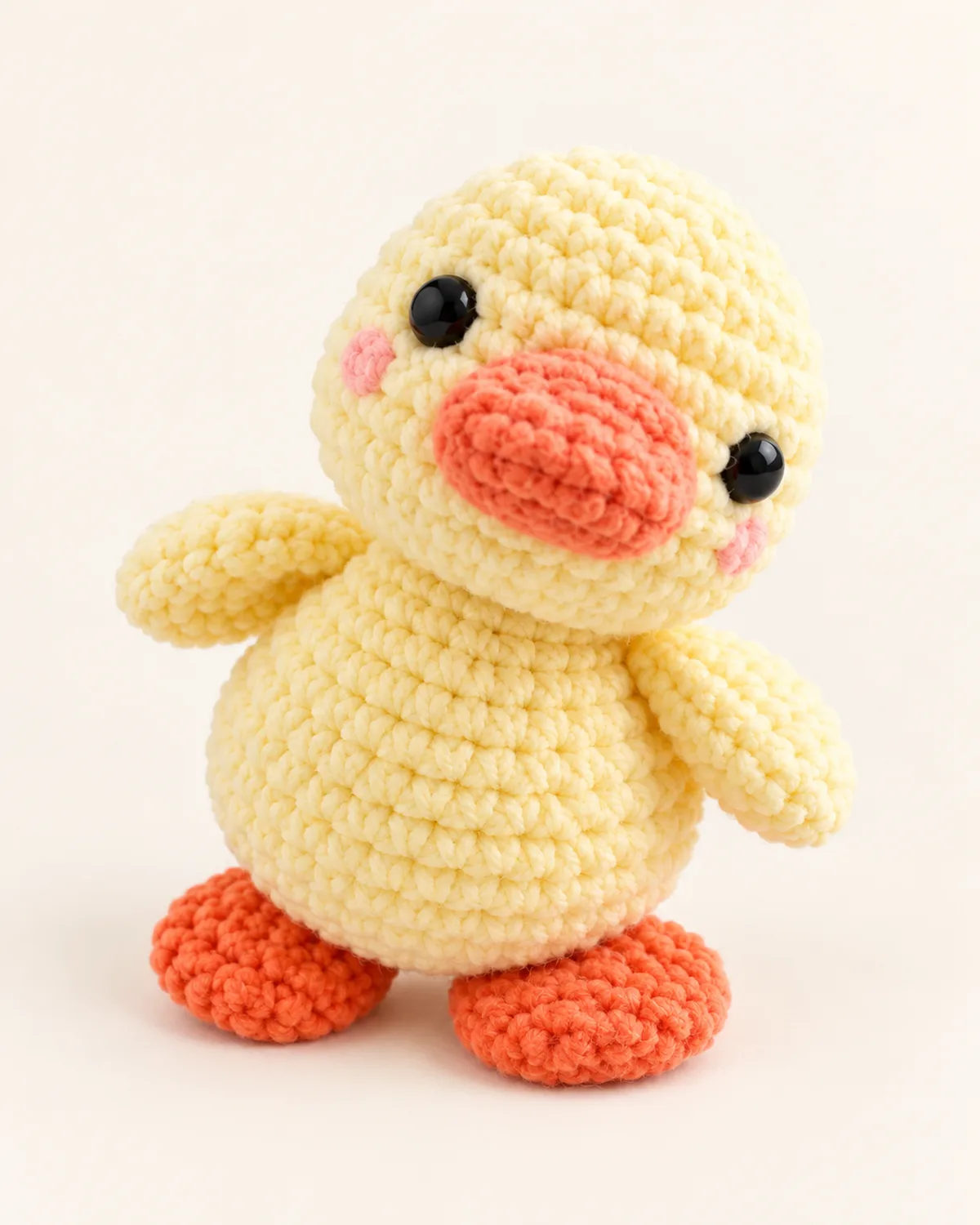
Making a stuffed toy? Then exact gauge matters less than a dense fabric. I’d try a hook one size smaller than the yarn label suggests, so the stitches close up and the stuffing stays out of sight. A little round animal like a loop stitch hedgehog or a kawaii duck looks much neater with tight stitches than with loose ones.
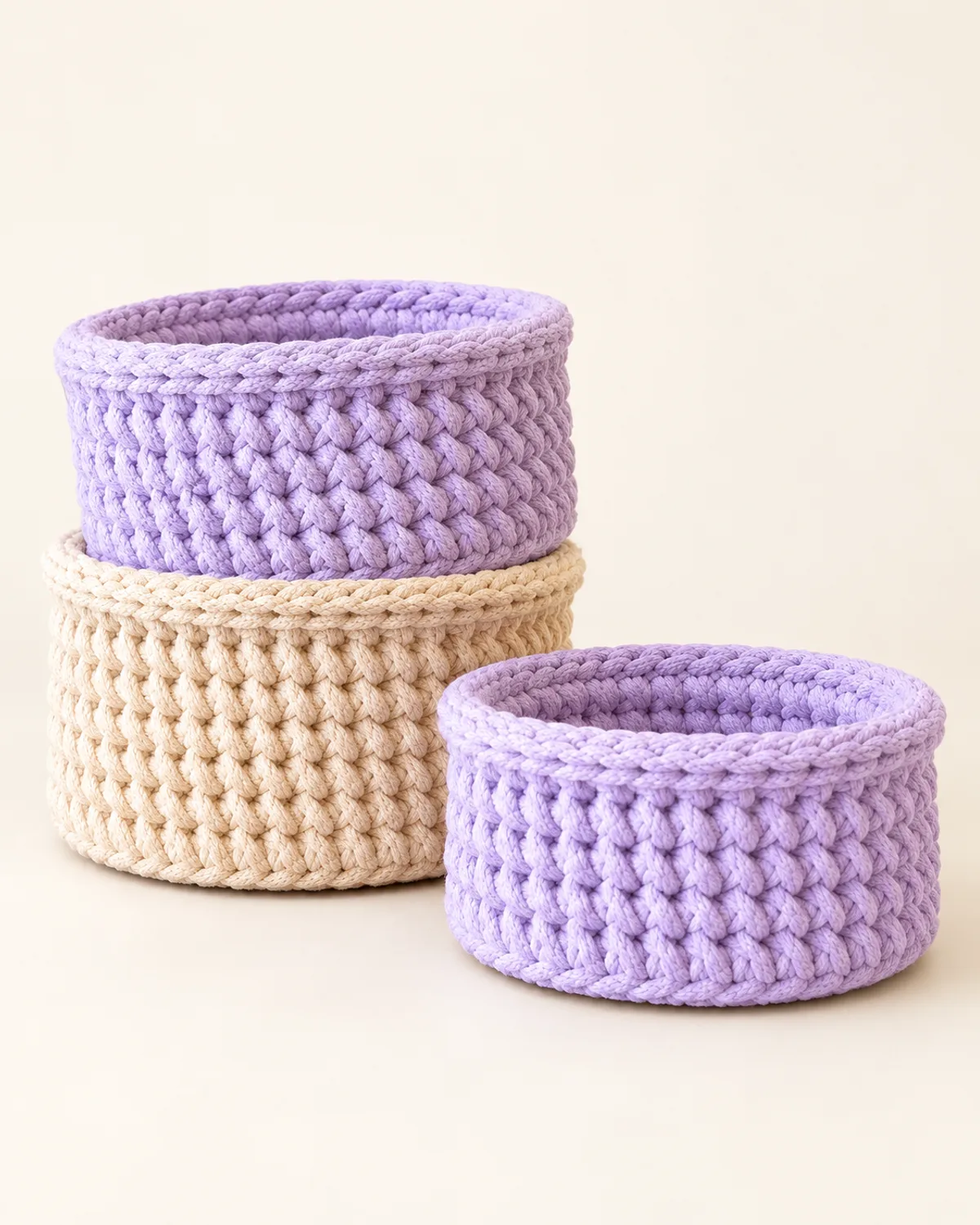
The same logic works for anything that has to stand up on its own. A crochet basket needs a stiff wall, and a hook at the small end of your yarn’s range gives you exactly that. Garments go the other way: they need drape, so a looser, even fabric suits them better than a stiff one.
Finding the size of an unmarked hook
Old hooks lose their printing, and wooden ones often never had any. A hook and needle gauge solves it: a flat card or plate punched with holes, each marked with its size in millimeters. Slide the shaft of the hook (not the head and not the handle) into the holes until you find the smallest one it passes through. That hole is its size.
No gauge? A ruler with millimeter marks gets you close on the bigger hooks, though not on the small ones, where a quarter of a millimeter matters. Once you know a hook’s size, write it on a bit of tape on the handle so you only measure it once.
Picking your next project from our crochet patterns? Read the hook size and yarn named in its listing before you buy anything, then match them against the two charts above.