How to read crochet patterns: abbreviations and US vs UK terms
A crochet pattern is a list of short instructions written in abbreviations, with punctuation that tells you what to repeat and a number at the end of each row or round that tells you how many stitches you should have. Before anything else, check whether it uses US or UK terms, because the same abbreviation means a different stitch in each.
Read everything before row 1
The top of a pattern is where most mistakes are prevented, and it’s the part people skip. Read it all before you pick up the hook.
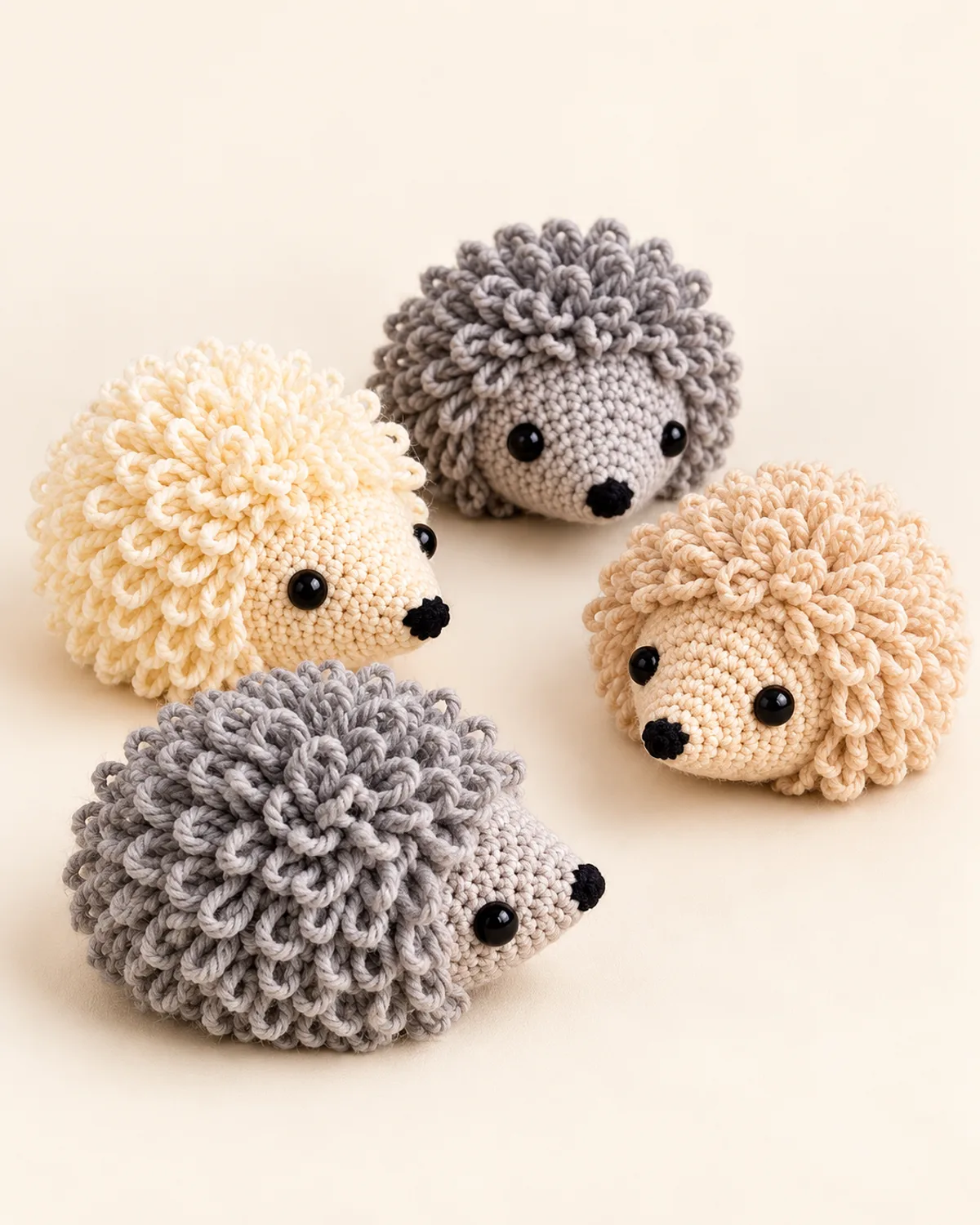
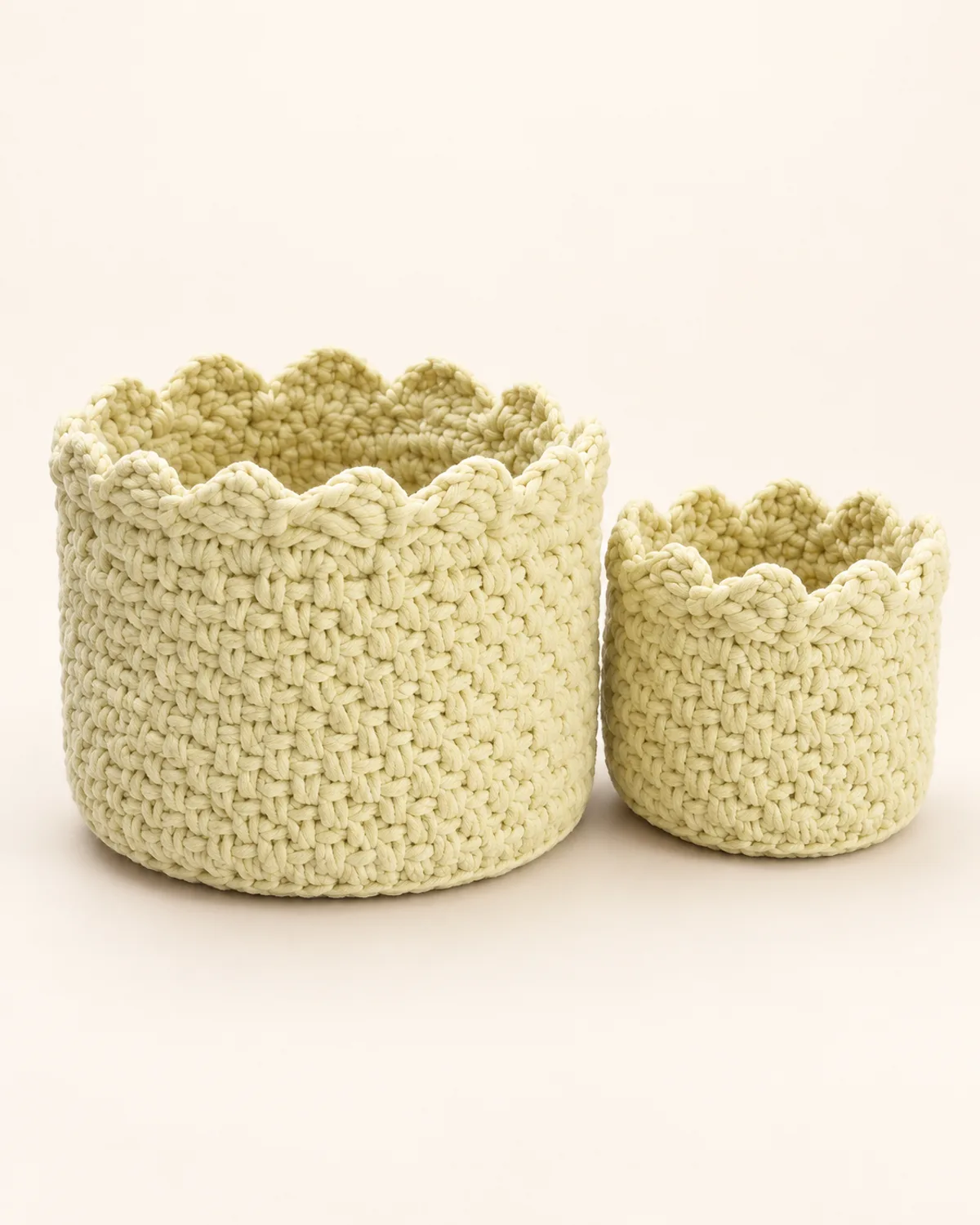
You will usually find the yarn (its weight, fiber and how much you need), the hook size, the gauge, the finished size, and a note on which terms the pattern uses. Then come the special stitches and the notes. A pattern built on a stitch you might not know, such as the loops on a loop stitch hedgehog or the bumpy texture of a rice stitch basket, normally explains that stitch here, before the rounds begin. The notes also tell you how the piece is worked: in rows, in joined rounds, or in a continuous spiral.
If the hook is given only as a letter, look it up on a crochet hook size chart and go by the millimeters, because letters vary between brands. If the gauge matters (it does for anything you wear), make a swatch now. Ten minutes here can save a whole sweater.
US or UK terms
US and UK crochet use the same stitch names for different stitches, shifted by one step. Here is how they line up.
| US terms | UK terms |
|---|---|
| slip stitch (sl st) | slip stitch (ss) |
| single crochet (sc) | double crochet (dc) |
| half double crochet (hdc) | half treble (htr) |
| double crochet (dc) | treble (tr) |
| treble (tr) | double treble (dtr) |
| skip | miss |
| gauge | tension |
So “dc” in a US pattern is a treble to a UK crocheter, and a UK “dc” is a US single crochet. The quickest test: look for single crochet. UK terms have no single crochet at all, so a pattern that uses “sc” is written in US terms.
The abbreviations you will meet most
These are the abbreviations that turn up again and again, with the meanings given in the Craft Yarn Council’s standard list.
| Abbreviation | Meaning |
|---|---|
| ch | chain stitch |
| sl st | slip stitch |
| sc | single crochet |
| hdc | half double crochet |
| dc | double crochet |
| tr | treble crochet |
| inc | increase |
| dec | decrease |
| sc2tog | single crochet 2 stitches together |
| dc2tog | double crochet 2 stitches together |
| sk | skip |
| st | stitch |
| sp, ch-sp | space, chain space |
| BLO, FLO | back loop only, front loop only |
| yo | yarn over |
| rep | repeat |
| rnd | round |
| beg | begin or beginning |
| RS, WS | right side, wrong side |
| pm | place marker |
| tog | together |
Designers add their own abbreviations for special stitches, and those live in the pattern’s notes. If you meet one you don’t know, look there first.
Brackets, parentheses and asterisks
The punctuation does more work than it looks. The Craft Yarn Council defines it like this.
An asterisk () means you repeat what follows it as the pattern directs. Two asterisks around a group (…*) mean you repeat everything between them as many times as stated. Square brackets [ ] and curly brackets { } hold a group you work as many times as directed. Parentheses ( ) do the same job, or they mark a group of stitches you work all into the same stitch or space.
That last use catches people out. “(dc, ch 2, dc) in next ch-sp” is one stitch group worked into a single space, not three steps spread along the row.
The number at the end of a round
The figure in parentheses at the end of a line, such as (18), is the stitch count: how many stitches you should have when that row or round is done. It’s the pattern’s way of letting you check your work as you go.
Count every time, at least until you trust your rhythm. If your number is off, go back now rather than three rounds later, when the miscount has grown into a lopsided shape.
Rows and rounds
Rows are worked back and forth: you reach the end, turn, and work back along the stitches you just made. Rounds go around in circles, and there are two kinds.
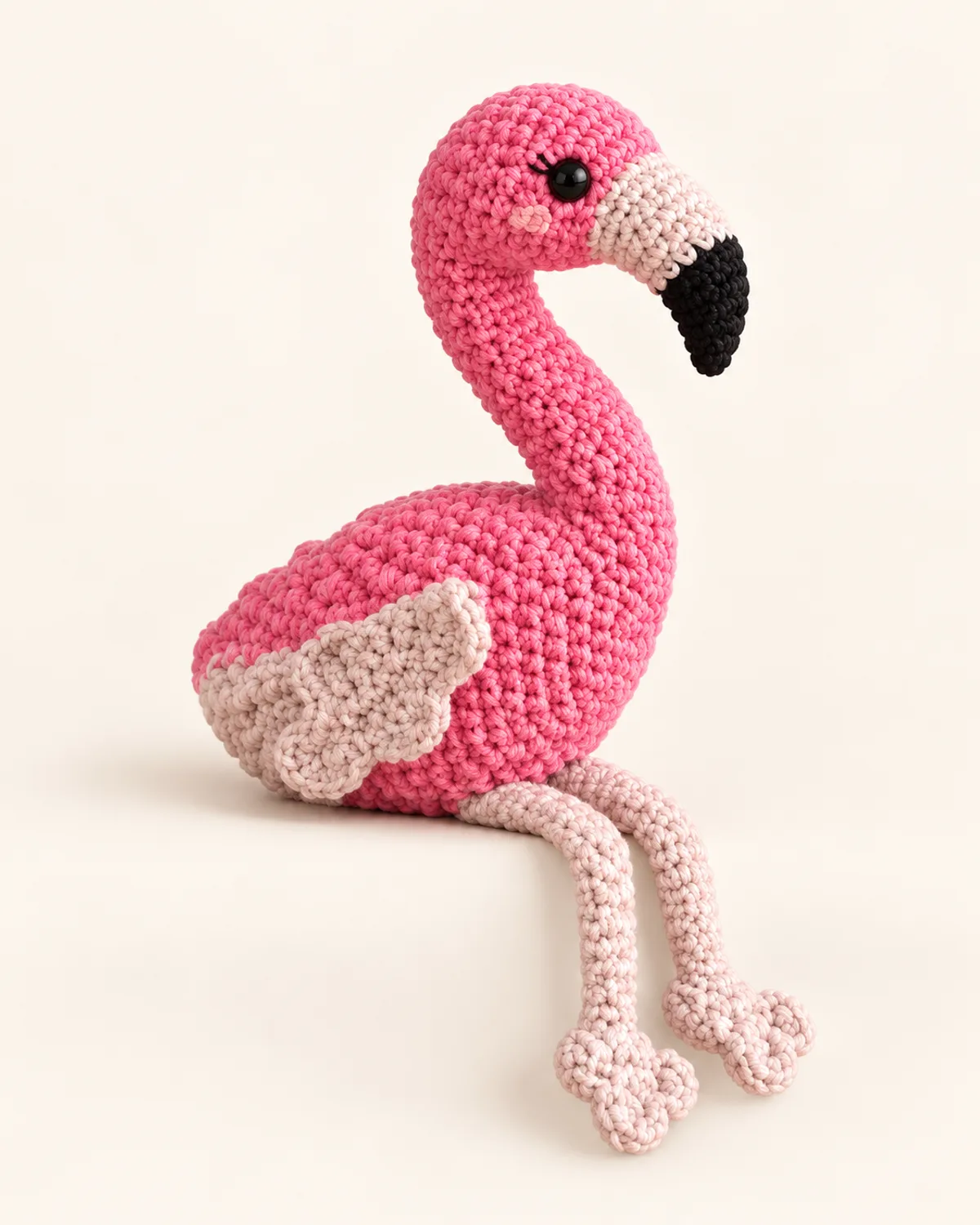
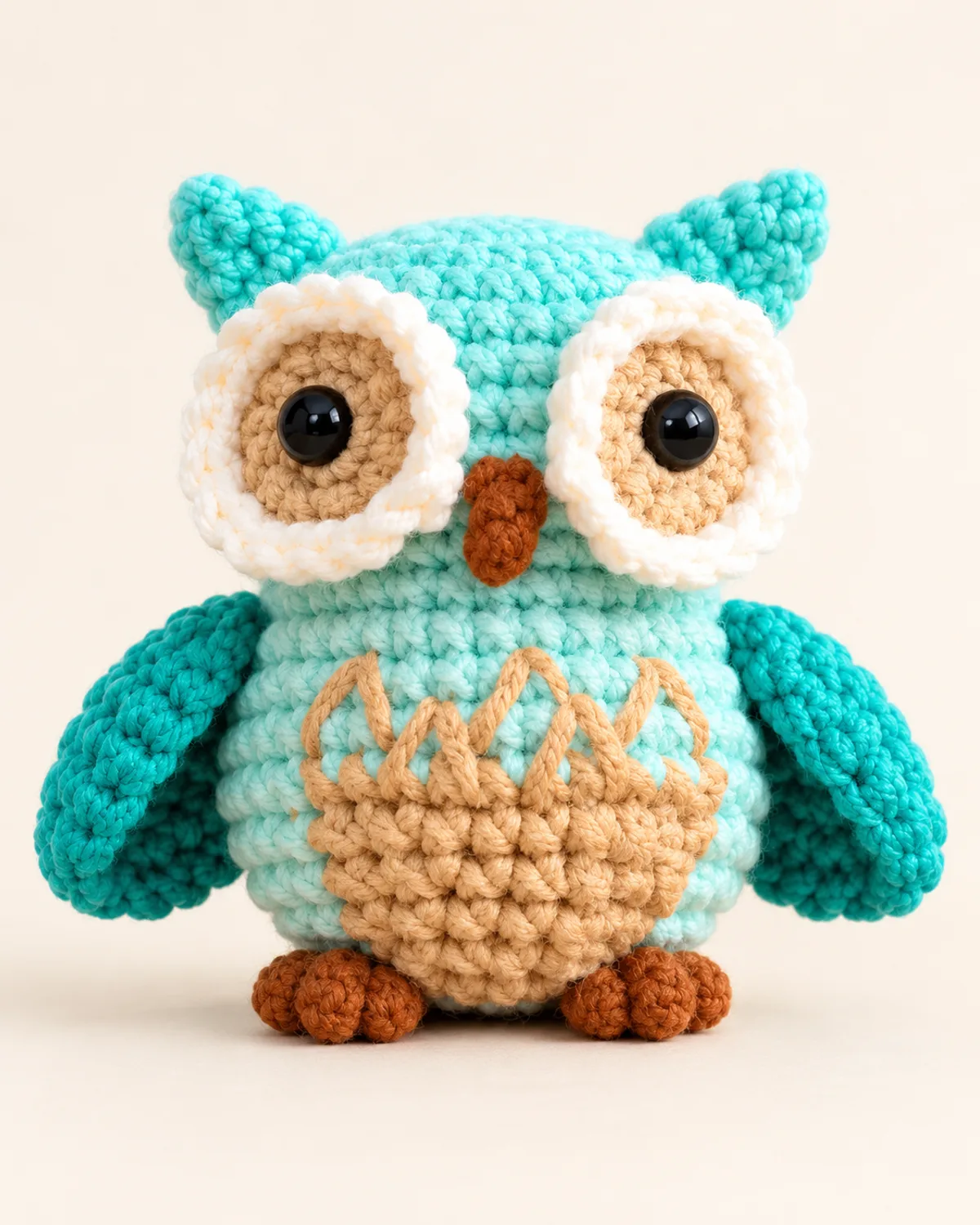
Joined rounds end with a slip stitch into the first stitch, so each round is a closed ring. Continuous rounds never join; they spiral upward without a seam, and that’s how most amigurumi is made. With a spiral, the start of each round is invisible, so you put a stitch marker in its first stitch and move the marker up as you go. Small stuffed toys such as a crochet flamingo or a forest owl are usually worked this way, which is why a marker matters so much on them.
One line, read slowly
Here is a line of the kind you will meet early in most amigurumi patterns:
“Rnd 3: *sc in next st, 2 sc in next st; rep from * 5 more times. (18)”
Read it in pieces. You are on round 3. Make one single crochet in the next stitch, then two single crochets in the stitch after it (two in one stitch is an increase). That pair of actions is the part after the asterisk, and you do it 5 more times, so 6 times in all.
Now the check. Round 2 ended with 12 stitches. Each repeat uses 2 of them and makes 3 new ones, and 6 repeats use all 12 and make 18. That’s the (18) at the end. If you count 17, you most likely missed the last increase; if you count 19, you probably worked into the first stitch twice.
Got stuck on a line anyway? Write it out in full words on paper, one action per line, then work from your own version. It feels slow, and it works.